
Business
Demographic Dividend in Italy:
Opportunities and Risks

Demographic Dividend in Italy (Source: Roberto Magni Daniela Comi By Foto ReD )
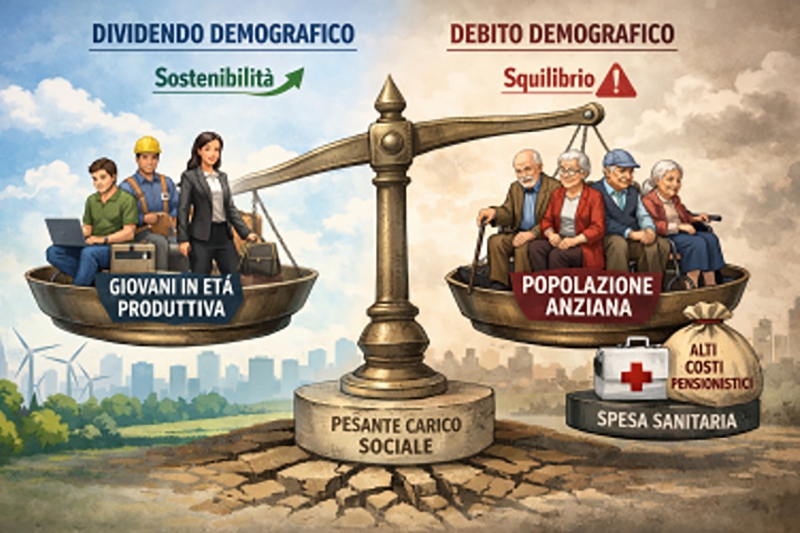
Demographic Dividend in Italy
(Source: Roberto Magni Daniela Comi By Foto ReD )
(Source: Roberto Magni Daniela Comi By Foto ReD )
Demography is a slow science, yet its consequences are fast. Alfred Sauvy, one of the fathers of modern demography, repeated this often. And yet, as he himself recounted, during many parliamentary hearings he had the impression that politicians were bored. Demography spoke about the future; politics was already elsewhere.
Sauvy was obsessed with time—not the short time of markets or legislative terms, but the long time of populations. Demographic changes mature slowly, almost silently, but when they become visible, their effects concentrate suddenly and often irreversibly. The paradox is that this very slowness makes them easy to ignore.
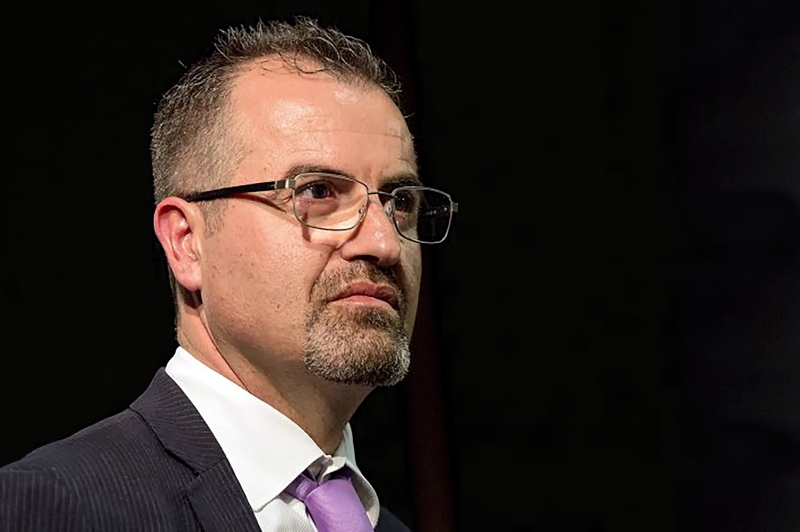
Ferdinando Lettieri Private Banker Fideuram
Source: Roberto Magni Daniela Comi By Foto ReD
Source: Roberto Magni Daniela Comi By Foto ReD
Italy experienced a long phase of high demographic dividend, accompanied by one of the highest levels of private savings in the world. Instead of setting aside that dividend and transforming it into long term investment, it chose to consume it. Short sighted political decisions artificially expanded the inactive population, creating early retirements and voluntarily reducing the productive base precisely at the moment of maximum demographic strength.
The pension system was often used as a tool for immediate consensus, while accumulated savings were not systematically directed toward productivity and human capital. Thus the country entered demographic debt having already consumed both its human and financial dividend. It was not longevity that put the system under strain, but the choice to treat the dividend as income rather than as responsibility.
The pension system was often used as a tool for immediate consensus, while accumulated savings were not systematically directed toward productivity and human capital. Thus the country entered demographic debt having already consumed both its human and financial dividend. It was not longevity that put the system under strain, but the choice to treat the dividend as income rather than as responsibility.
And politics? Seeking immediate consensus—often through reassuring language that evokes a “community” where a real community often no longer exists—is a dangerous shortcut. Politics should not limit itself to comforting voters in the present, but should “pre occupy” itself with the future. For a simple reason: that is where we will spend the rest of our lives.
The transition from dividend to demographic debt is never sudden. It is an announced, measurable, visible process that unfolds over decades. And precisely for this reason, it is often ignored.
The transition from dividend to demographic debt is never sudden. It is an announced, measurable, visible process that unfolds over decades. And precisely for this reason, it is often ignored.
Like Fra Cristoforo’s pointing finger in The Betrothed, demography does not accuse; it indicates. It indicates the passing of time and the consequences that accumulate when decisions are postponed or avoided. The demographic dividend is the moment in which a society discovers whether it is capable of looking beyond the present. When that moment passes, no guilt remains. What remains is a bill. And it is always steep.
Text by Ferdinando Lettieri
Private Banker at Fideuram Financial Advisor and Expert in Financial Education www.ferdinandolettieri.com
Ferdinando Lettieri is a Private Banker at Fideuram with extensive experience in financial consulting and wealth planning. For many years, he has supported families, professionals, and businesses in the conscious management of their financial resources, adopting an approach that combines technical expertise, strategic vision, and a strong focus on long term financial sustainability.
He is actively engaged in financial education and economic literacy, promoting a more informed, responsible, and future oriented financial culture. Through analyses, public talks, and educational content, he helps make complex topics—such as saving, investing, retirement planning, and demographic dynamics—more accessible and understandable.
His work is guided by a clear principle: knowledge is the first and most essential tool for protecting and growing one’s wealth.
Private Banker at Fideuram Financial Advisor and Expert in Financial Education www.ferdinandolettieri.com
Ferdinando Lettieri is a Private Banker at Fideuram with extensive experience in financial consulting and wealth planning. For many years, he has supported families, professionals, and businesses in the conscious management of their financial resources, adopting an approach that combines technical expertise, strategic vision, and a strong focus on long term financial sustainability.
He is actively engaged in financial education and economic literacy, promoting a more informed, responsible, and future oriented financial culture. Through analyses, public talks, and educational content, he helps make complex topics—such as saving, investing, retirement planning, and demographic dynamics—more accessible and understandable.
His work is guided by a clear principle: knowledge is the first and most essential tool for protecting and growing one’s wealth.
more information: https://www.redmagazine.red
Liability for this article lies with the author, who also holds the copyright. Editorial content from USPA may be quoted on other websites as long as the quote comprises no more than 5% of the entire text, is marked as such and the source is named (via hyperlink).